
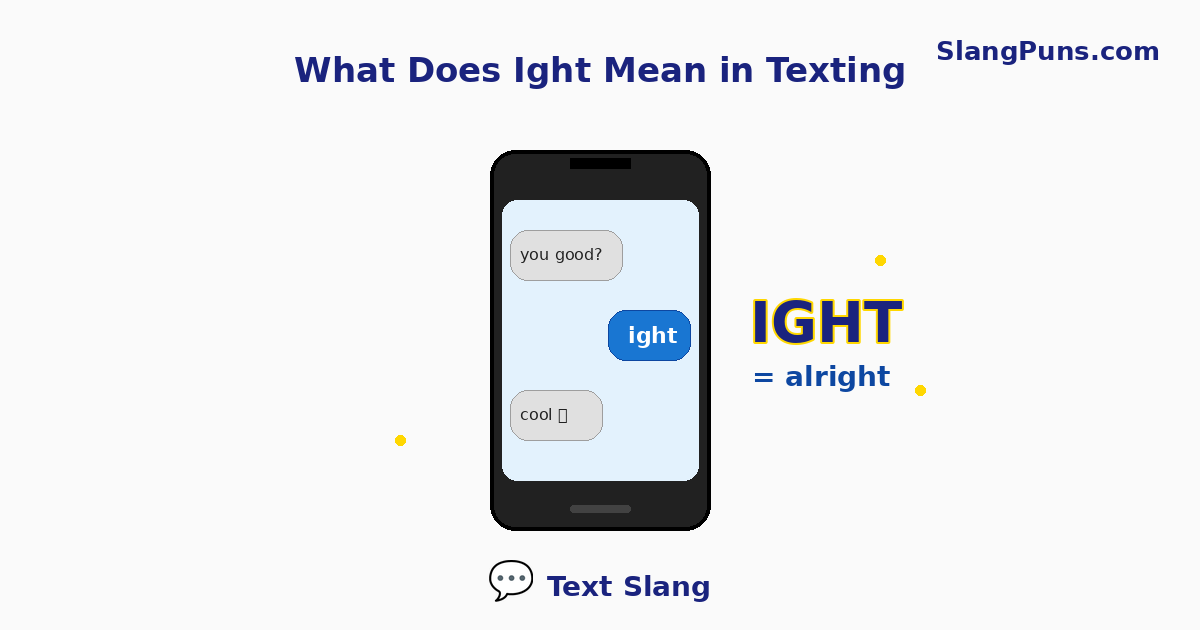
Have you ever received a text message that just says “ight” and wondered if your friend was being short with you, agreeing to something, or just saying “alright” in the most condensed way possible? Understanding what does ight mean in texting reveals one of the most efficient pieces of modern texting slang — a four-letter response that has become standard in casual digital communication. The word looks strange when written but rolls off the tongue naturally when spoken, capturing exactly how millions of people actually pronounce “alright” in fast speech.
“Ight” represents a perfect example of how texting and spoken slang influence each other in the digital age. The word emerged from the natural way people clip “alright” in casual conversation, then got captured in written form as people typed messages quickly. Now it appears constantly in text messages, social media replies, gaming chat, and everywhere else young people communicate digitally. Understanding the full range of meanings, tones, and uses of ight helps you decode texts accurately and use the term naturally yourself.
The Core Definition of Ight
In texting, “ight” is a shortened, casual spelling of “alright.” It functions as a quick response indicating agreement, acknowledgment, understanding, or general acceptance of what someone has just said. The word captures the natural way people often pronounce “alright” in fast, casual speech — dropping the “al-” beginning and softening the ending into a quick “ight” sound. Like many texting abbreviations, it saves keystrokes while preserving meaning.
How Ight Is Pronounced
The word ight is pronounced as a single syllable, rhyming with words like “fight,” “right,” or “sight.” The pronunciation is essentially “alright” with the “al-” part removed and the “-right” softened slightly. When spoken, it sounds like a quick exhale of agreement — fast, casual, and unmistakably informal. This natural spoken form is exactly what the written texting version captures.
When People Use Ight
Ight appears in texting whenever someone wants to give a quick affirmative response without using full words. It works for confirming plans (“we still meeting at 6? — ight”), acknowledging information (“did you see my message? — ight”), agreeing to requests (“can you bring the food? — ight”), and ending conversations casually (“see you tomorrow — ight”). The word is incredibly versatile because acknowledgment and agreement are constant needs in text messaging.
The Tone of Ight
The tone of ight is casual and relaxed. Using ight signals that you are comfortable with the person and the situation, that you do not need to use formal language, and that you are content with whatever was said. It is not as enthusiastic as “yes!” or as formal as “okay,” sitting comfortably in the middle as a default casual acknowledgment.
Where the Word Ight Comes From
Like many texting slang terms, ight has a fascinating origin story that reveals how digital communication interacts with spoken English. Understanding this history helps explain why the word looks the way it does.
Roots in African American Vernacular English
The pronunciation that ight captures has deep roots in African American Vernacular English (AAVE), where dropping the unstressed “al-” syllable in “alright” has been common for generations. The clipped pronunciation eventually entered mainstream American English through music, media, and everyday speech, gradually becoming standard casual pronunciation across various groups.
Texting Era Adoption
When texting became popular in the early 2000s, people began writing words exactly as they pronounced them in casual speech. This natural process produced spellings like “ight” for the clipped pronunciation of alright. Once a few people started writing it this way, the spelling spread quickly through text messages, instant messages, and eventually social media posts.
Social Media Amplification
Twitter, Instagram, TikTok, and other platforms accelerated the spread of ight. The character economy of older Twitter (with its 140-character limit) particularly encouraged short spellings, while Gen Z’s preference for casual, lowercase texting made ight feel natural alongside other shortened words. By the 2020s, ight was firmly established in mainstream digital vocabulary.
Different Ways Ight Is Used
Ight is remarkably versatile, appearing in many different communication contexts. Understanding these various uses helps you interpret messages accurately.
As a Simple Yes or Agreement
The most common use of ight is as a quick affirmative — equivalent to saying “yes,” “okay,” or “sure.” When someone proposes a plan or asks for confirmation, replying with ight indicates agreement. Examples: “want to grab food later? — ight” or “I’ll send the file now — ight”. The word does the same work as “yeah” or “alright” but with even less typing effort.
As an Acknowledgment
Ight can simply acknowledge that you received and understood a message without necessarily agreeing or disagreeing. When someone tells you something neutral, like “I’ll be running late,” responding with ight just shows you got the message. This use is similar to “noted” or “got it” but feels more casual and less formal.
As a Conversation Ender
Sometimes ight signals that the conversation has reached a natural conclusion. After agreeing to plans, confirming details, or wrapping up a discussion, sending ight can mean “okay, we’re good here, conversation done.” This use lets people close text exchanges without elaborate goodbyes, fitting the efficient nature of digital communication.
As a Pause Before Saying More
“Ight so…” has become a common opener for longer messages or thoughts. The word functions as a verbal pause, letting the speaker gather their thoughts before continuing. Examples: “ight so what we doing tonight?” or “ight here’s my plan.” This use mirrors how people speak, using ight the way someone might say “alright” before launching into a longer statement.
Variations and Related Texting Slang
Ight has several variations and is closely related to other casual texting words. Recognizing these helps you understand the broader landscape of modern digital language.
Aight
“Aight” is a slightly longer variation that keeps a bit more of the “alright” sound. Some people prefer this spelling because it feels closer to the actual pronunciation, while others prefer the shorter “ight.” Both are widely accepted and mean exactly the same thing. The choice is largely a matter of personal preference or regional habit.
Ight Bet
“Ight bet” combines two pieces of slang to express enthusiastic agreement, especially for plans or challenges. “Bet” by itself means “I agree” or “I’ll do that,” so adding ight intensifies the agreement. Saying “ight bet” to a plan means you are definitely in. Example: “let’s hit up the new restaurant — ight bet.”
Ight Cool
“Ight cool” combines agreement with positive feeling. It indicates not just that you are okay with something but that you actively approve. Example: “I’ll bring snacks too — ight cool.” The combination feels slightly warmer than just “ight” alone.
Ight Say Less
“Ight say less” or “say less” is another popular agreement phrase meaning “got it, no more explanation needed.” It signals that you understood completely from limited information. When someone explains their plan and you reply with “ight say less,” you mean you are fully on board.
Ight in Different Communication Platforms
The use of ight varies slightly across different communication platforms based on the conventions of each platform.
Text Messages
In SMS and standard text messaging, ight is one of the most common single-word responses. It works particularly well when you do not have time to type a longer reply but want to acknowledge a message. The brevity matches the quick back-and-forth nature of texting between friends and family.
Direct Messages on Social Media
Instagram DMs, Twitter messages, Snapchat conversations, and other social media direct messaging all feature heavy use of ight. The casual nature of these platforms makes the informal spelling feel natural. Responses to stories, replies to posts, and chat conversations all commonly include ight as a quick acknowledgment.
Gaming Chat
In voice chats and text chats during online gaming, ight appears constantly. Players use it to acknowledge calls from teammates, agree to strategies, or confirm they have heard instructions. The fast pace of gaming makes short words like ight perfect for quick communication during play.
Group Chats
Group chats are full of ight responses. With multiple people contributing, having a short way to acknowledge or agree keeps the conversation moving without flooding the chat with long messages. People often use ight to indicate they are following the conversation even if they have not contributed substantively.
When Not to Use Ight
While ight is incredibly versatile in casual communication, certain contexts call for more formal language. Knowing when to avoid ight helps prevent awkward miscommunication.
Professional Communication
Work emails, business texts, and professional messaging generally call for more formal language. Replying to your boss with “ight” when they ask if you can attend a meeting would be inappropriate in most workplace cultures. Save ight for casual communication with friends, family, and people you have established casual relationships with.
First Impressions
When meeting new people through texting or messaging — whether romantic, professional, or otherwise — leading with informal slang like ight can give the wrong impression. Wait until you have established a comfortable rapport before slipping into the most casual versions of language.
Important or Serious Topics
When discussing serious matters — relationship issues, family problems, important decisions — single-word responses like ight can feel dismissive. These conversations call for fuller engagement and more substantive responses. Using ight for a serious topic might make you seem uninterested or unwilling to engage meaningfully.
With People Who Misunderstand It
Some people — particularly older generations or those unfamiliar with internet slang — may not recognize ight as a normal response. If you are texting with someone who might not understand the slang, using more standard language like “okay” or “alright” prevents confusion.
Frequently Asked Questions
Q1: What does ight mean in texting?
Ight is a casual texting abbreviation for “alright.” It is used as a quick response indicating agreement, acknowledgment, or general acceptance of what someone has just said. The word captures how people often pronounce “alright” in fast, casual speech by dropping the “al-” beginning. It functions like “yes,” “okay,” or “sure” but feels more casual and saves keystrokes when typing quickly. The word is now extremely common across text messages, social media, and gaming chat.
Q2: Is ight a real word?
Ight is not in formal dictionaries, but it is widely recognized and used as legitimate informal slang. The word emerged from how people actually pronounce “alright” in fast casual speech, and the texting era captured this pronunciation in written form. Whether you consider it a “real word” depends on how strict your definition is — it is certainly real slang that millions of people use and understand, even if formal dictionaries have not yet officially recognized it.
Q3: What is the difference between ight and aight?
Both ight and aight mean exactly the same thing — they are casual abbreviations of “alright.” The only difference is the spelling. “Aight” keeps a bit more of the original word, while “ight” is even more condensed. Choice between the two is largely personal preference or habit. Some people consistently use one spelling, while others alternate between them. In meaning and usage, they are completely interchangeable.
Q4: Where did the slang ight come from?
The pronunciation captured by ight has roots in African American Vernacular English (AAVE), where dropping the unstressed “al-” in “alright” has been common for generations. As this pronunciation entered mainstream American English through music, media, and everyday speech, people began writing it as ight in casual texting. Social media platforms like Twitter and TikTok amplified the spelling to mainstream use, where it became standard across digital communication by the 2020s.
Q5: Can I use ight in professional contexts?
Generally no — ight is too casual for most professional contexts like work emails, business communication, or formal exchanges. Using it in professional settings can make you seem unprofessional or careless. Save ight for casual communication with friends, family, and others you have established informal relationships with. In professional contexts, stick with full words like “okay,” “alright,” “confirmed,” or “understood” to maintain appropriate formality. Once you know your workplace culture, you can adjust accordingly.
Conclusion
Understanding what ight means in texting opens up one of the most common pieces of modern digital slang. The word represents a perfect example of how spoken language influences written communication in the digital age. Started as a natural way to clip “alright” in fast speech, ight got captured in writing as people typed messages quickly and informally, eventually becoming standard texting vocabulary across multiple generations of users.
The journey of ight from spoken pronunciation to standardized texting slang reflects broader patterns in how language evolves in our era. Words that were once just regional or community-specific pronunciations now spread globally through social media and digital communication. What started in African American Vernacular English has become standard slang used by millions of people across many backgrounds, showing how language diffuses through digital networks in ways traditional communication never allowed.
The versatility of ight is part of what makes it so popular. The single word can express agreement, acknowledgment, conversation transitions, and casual approval — functioning as one of the most efficient pieces of communication available in modern texting. When you can convey “I heard you, I agree, we’re good” in just four characters, you have a remarkably useful tool for fast-paced digital conversation. This efficiency matches the pace of modern messaging culture, where lengthy formal responses often feel out of place.
For anyone navigating modern texting, mastering when and how to use ight helps you communicate naturally with younger generations and casual contacts. The word is now so widespread that not knowing it can make you seem out of touch in casual digital conversation. Yet using it inappropriately — in professional contexts or with people who do not recognize it — can also create awkwardness. The skill lies in reading the conversational context and choosing the right register for each situation. Like all good slang, ight rewards users who understand its proper context rather than scattering it everywhere indiscriminately.
The next time you see ight pop up in a message, whether you are receiving it or considering sending it, you can now decode and use it with full understanding. The word may look like a typo or random letters to outsiders, but to insiders it carries all the meaning of “alright” with the added flavor of casual, comfortable, modern communication. Embrace it when the moment calls for it, save it for the right contexts, and join the millions of people who have made ight one of the defining slang words of the digital communication era. Like many great pieces of slang, its strength lies not in complexity but in its perfect simplicity — one short word that does exactly what is needed without any fuss.